

close
Choose Your Site
Global
Social Media


Views: 100 Author: Mok Publish Time: 2025-12-02 Origin: Site


FAQ: Double Loading Polished Tiles
Q1: What are Double Loading Polished Tiles?
A: Let's break it down simply.
Main Idea: Before pressing, two different types of ceramic powder (a base layer and a top layer) are placed separately into the mold.
These layers are then pressed together under high pressure to form a single, strong tile body, which is then fired and polished.
Base Layer: This is the main body of the tile, making up 80-90% of its thickness. It gives the tile its strength and durability.
Top Layer: This is a thin surface layer (10-20%) that determines the tile's final color, pattern, and design.
Think of it like making a sandwich: a base and a decorative top layer are pressed as one. This "double loading" process is the key to its name and high quality.
Q2: How is this technology used for Polished Terrazzo Tiles?
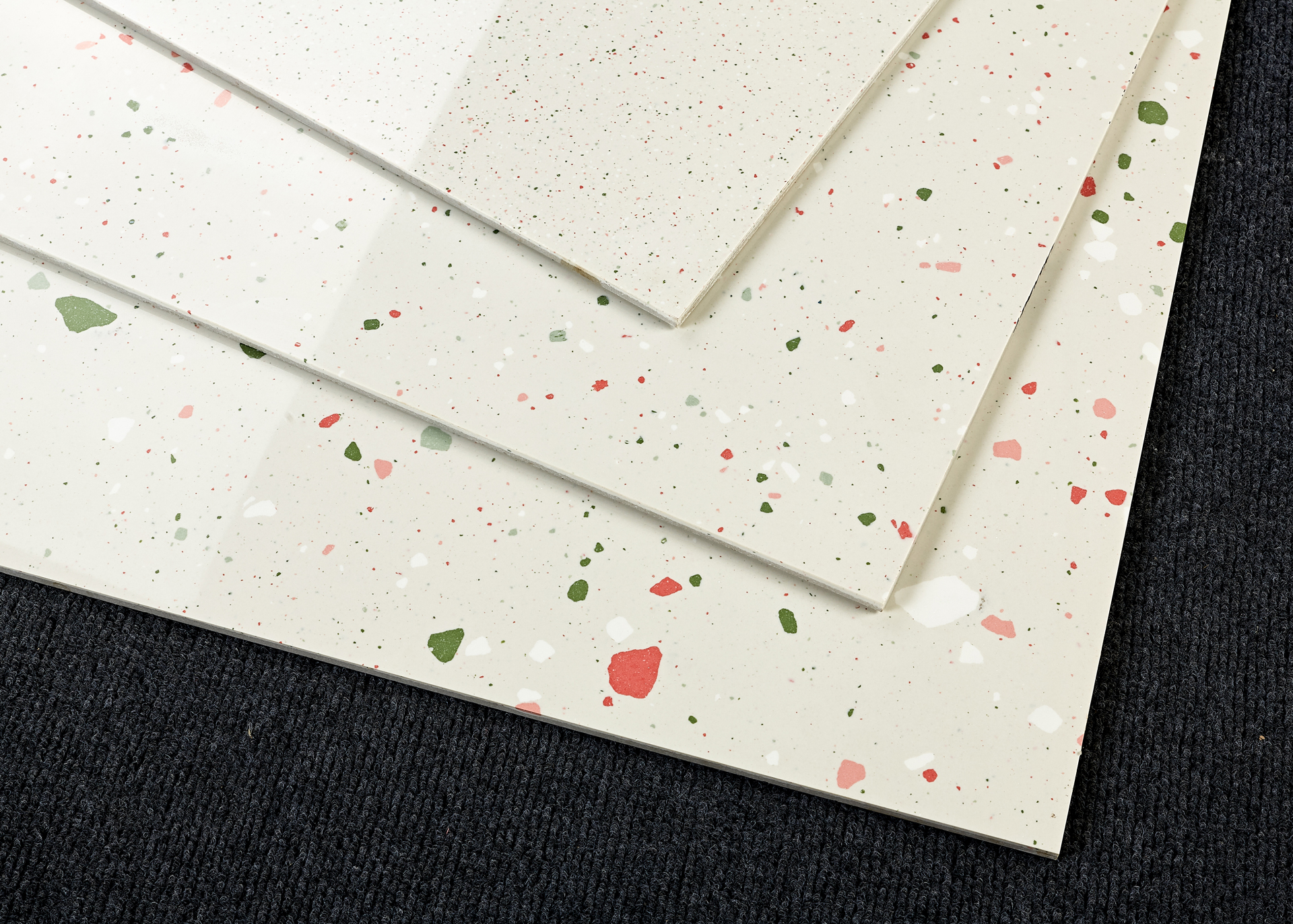
A: The double pressing method is perfect for modern polished terrazzo tiles. The base provides strength, while the top layer is where designers add specific colors and chips
to create the classic, random terrazzo look. After pressing and firing, the tile is polished to a smooth, shiny finish, revealing the beautiful terrazzo pattern beneath.
Q3: Are these polished tiles good for high traffic floors?
A: Yes, absolutely. Double Loaded polished tiles are an excellent choice for high-traffic commercial flooring. The top layer uses a hard, wear-resistant mineral formula, creating
a super durable surface. The base layer ensures overall structural strength and stability. They are perfect for malls, airports, hotel lobbies, and office corridors, combining
beauty with long-lasting performance.
Q4: What is the surface finish? Is it a glossy tile?
A: Yes. After firing, the tile is polished to create a smooth, light-reflective surface. This is a glossy floor tile. This glossy finish enhances the color and pattern, making floors
look bright, clean, and spacious.
Q5: Where is it best to use Polished Tiles?
A: Polished tiles are known for being hard and highly wear-resistant, making them ideal for high-traffic areas.
Great for:
Commercial & Public Spaces:
Shopping Malls & Retail Stores: Handles heavy footfall, easy to clean, and the shine adds a luxury feel.
Office Lobbies & Hallways: Creates a professional, modern image and withstands daily wear.
Hotel Lobbies & Banquet Halls: Achieves a luxurious and impressive visual effect.
Airports & Train Stations: Withstands extremely high traffic and luggage wear.
Home Spaces - Specific Areas:
Living Room: Makes the room look spacious, bright, and grand. Ideal for modern and minimalist styles.
Dining Room & Hallways: Enhances light and space, easy to clean.
Enclosed Balcony: If your balcony is enclosed and protected from rain, polished tiles can extend your living space seamlessly.
(Not recommended for open balconies, see Q6).
Q6: Where should you NOT use Polished Tiles?
A: It's important to know the limitations. The main downsides of polished tiles are lower slip resistance and a very reflective surface.
Not Recommended For:
Bathroom/Shower Floors: Not recommended! The surface becomes very slippery when wet, creating a safety hazard.
Kitchen Floors: Use with caution. While easy to clean, spilled water or oil can make them slippery. If you choose them, pick a style with a slight
texture and clean spills immediately.
Open Balconies & Patios: They are not slip-resistant and can be damaged by long-term exposure to weather and sun.
Elderly or Children's Rooms: For safety, choose tiles with better slip resistance, like matte or textured finishes.
Final Recommendation:
Polished tiles are a product made for living rooms and commercial spaces. They prioritize durability and a brilliant shine for areas where style
and heavy use are key considerations.


